Cruise Port Guide | Venice, Italy
Located in the North East of Italy close to the border of Slovenia, Venice is the capital of the Veneto region. For many years it was regarded as the gateway port for the Adriatic, Greek Isles & beyond. In more recently times this is no longer the case mainly due to over tourism especially during the high of the Summer season & with cruise ships even increasing in size, their was growing concern in regard to damage to historical building as they passed up the grand canal.
Only a handful of luxury or smaller cruise ships are permitted to call in to Venice directly, with many cruise ships having to dock on the mainland at Fusina & Chioggia or even further a field in Ravenna or Trieste - both of which can be over 2-3hrs one way by coach.
When you combine this with the new tourist tax that are imposed on day visitors to Venice, it is increasingly become more difficult to explore this historic city & all that it has to offer.
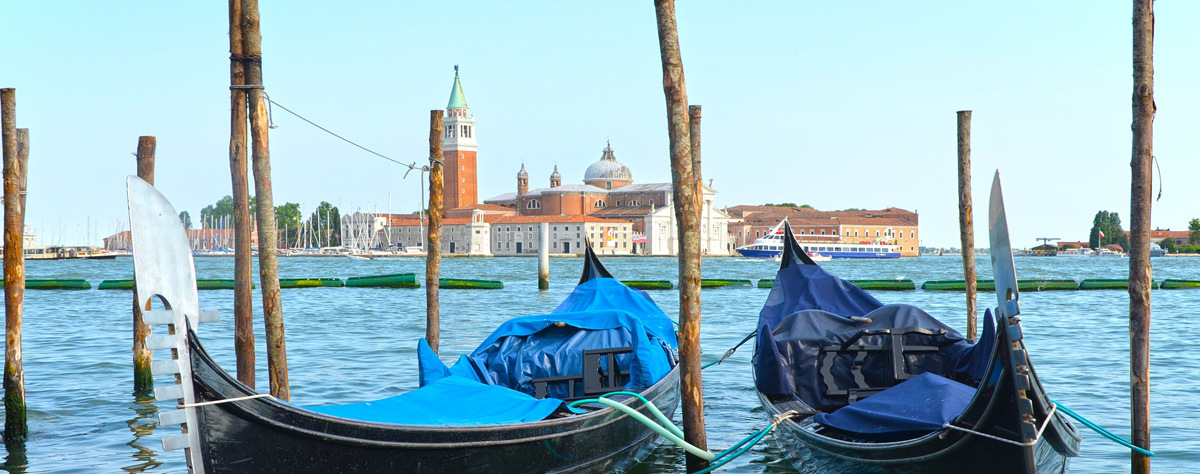
With a population of more than 270,000. Venice is famously know as a place for the romatic at heart, artists and poets, this magical city is spread out over 100 islands in the Venetian Lagoon at the mouths of the Po and Piave rivers and is commonly know as the City of Bridges. The city if often refered to as the city of "gondole" which is linked to the transportation used by many to cross the numerous canals and waterways throughout the city.
According to a local legend, Venice was founded on the 25th of March 421. The legend seems to be confirmed by official history: indeed, remains of Venice's origins date back to the 5th century, when people ran away from the Barbarian invasions striking the North of Italy and sought refuge in Rialto (a little island of the lagoon).
At this time, the lagoon was under Ravenna's sphere of influence, which was part of the Eastern Empire. It's only at the end of the 7th century that a power independent from Byzantium was established, even if Venice remained bound to the Empire's capital. The first Doge was elected afterwards and the “Dogado” (Duchy of Venice) arised as the first form of Venetian State. Browse cruises visiting Venice
Weather
To make the most of your holiday, Venice's hottest month of the year is July with an average temperature of 23°C (73°F), this is also when you will see the most sunshine with an average of 13 hours a day. Its also worth noting that June is the wettest months with an average of 90mm of rain. Finally for those looking to take a dip in the sea the best month is August when the average sea temperature is 26°C (79°F).

Things to see & do in Venice
Palazzo Ducale - The Doge's Palace
Its the most emblematic symbol of the Venetian Republic during its majestic and impressive Empire, as well as during its cultural and artistic development.It was founded in the XI century and was initially a castle; during the XIV and XV century modifications gave it the gothic architectural structure that is still present today. Palazzo Ducale was the residence of the Doge (the highest office in the Serenissima), and also the seat of many different political and social institutions.
In some ways, it had the same function as other important historic buildings such as the Palazzo Vecchio in Florence. In 1796, it became a public palace. The offices and rooms were very organised. The first floor was occupied by minor institutions such as the Censor, the Law Offices and the Naval Offices.
The second floor contained the most important rooms of the palace:
- the Grand Council Chamber; the Ballot Chamber, where the Doge was elected; the Doge’s apartments.
The third floor was occupied by the Sala del Colleggio, in which foreign ambassadors were received. The room called "Bussola"("compass") was used by citizens to complain and resolve problems against other citizens. Finally the "State Inquisitor Room" was used as a interrogatory room.
The Bridge of Sighs (Ponte dei Sospiri)
Built in the 16th century, this enclosed bridge is made of white limestone and has windows with stone bars and It connects the old prisons with the rooms of the Doge's Palace where prisoners were interrogated. The name was given by Lord Byron in the 20th century, refering to the prisoner's last sigh, upon their last look at Venice, before they were taken down to their cells.
Today, the "Bridge of Sighs" is very popular among young lovers. According to a local legend, if they kiss under the bridge in a gondola at sunset, they are guaranteed eternal love
Rialto Bridge (Ponte di Rialto)
The oldest and most famous Venetian bridge, itcrosses the Grand Canal and was built in 1181 by Nicolò Barattiere and called "Ponte della Moneta". In 1250, the bridge was rebuilt in wood and was connected to the market located close by; since then it has been named the "Ponte di Rialto".
In 1503 the Doge proposed building the bridge out of stone; famous architects like Palladio, Sansovino and Vignola presented their ideas for the bridge, but they were considered unsuitable.The present bridge was built by Antonio del Ponte in 1591. It's very similar to the former wooden bridge: there is a central portico and two inclined ramps in which many shops are located.
Glass Museum (Murano)
You can't visit Venice without seeing the world-famous Murano glass. Located on the smallest islands just off the Centre it also host a museum dedicated to this centuries-old art, with an archeological collection showing pieces from the Roman Empire. The building was originally the residence of the bishops of Torcello before it became the residence of Bishop Marco Giustiniani who later donated the building to the Torcello diocese. In those years the palace underwent several architectural modifications according to the design of Antonio Gasperi.
When the diocese was abolished, it became property of the Municipality of Murano (1840). From 1923, the museum became part of the Venice Civic Museums, the large central room on the Grand Canal is iluminated by its beautiful fresco created by Francesco Zugno, representing the allegoric Triumph of San Lorenzo Giustiniani.